
Single vs double door fridge: best value for budget buyers

For most budget-conscious households, a single-door fridge wins on running cost and upfront price, but a double-door model earns its keep the moment your family outgrows a small freezer compartment. A basic single-door unit typically costs less to buy and can use around 30 to 40% less energy than an equivalent double-door fridge. That gap alone can settle the decision for anyone watching their electricity bill.
Three facts drive that verdict:
- Capacity split: single-door models generally max out around 250 litres, while double-door units start near 250 litres and climb past 500, so double-door only makes sense once you actually need that extra space.
- Running cost: single-door direct-cool fridges tend to use less electricity; frost-free double-door models draw more to run the fan and auto-defrost system, though an inverter compressor narrows that gap on larger units.
- Maintenance load: most single-door fridges need manual defrosting every few weeks, while double-door frost-free models rarely need any manual defrosting at all.
Key Takeaways
Choosing between a single and double door fridge comes down to balancing upfront price and running cost against usable capacity and how much maintenance effort you're willing to put in.
| Point | Details |
|---|---|
| Default to single-door for smaller households | Lower upfront price and typically lower annual energy use suit tight budgets and small kitchens. |
| Move to double-door once capacity runs out | Families needing 250 to 500+ litres gain organisation and frost-free convenience at a higher running cost. |
| Manual defrosting is a real ongoing task | Direct-cool single-door models need defrosting every 2 to 4 weeks to avoid raised energy use. |
| Check the energy label and compressor type | Inverter compressors narrow the running-cost gap between the two configurations significantly. |
| Compare warranty and local support before buying | Kenyatronics lists compressor warranty terms clearly on models like the Samsung RT31CG5421S9 and LG GC-V459FSKW. |
Table of Contents
- Single vs double door refrigerator: quick comparison at a glance
- Single door refrigerator styles: pros, cons and who they suit
- Double door refrigerator styles: pros, cons and who they suit
- Capacity, energy use and maintenance: the numbers that decide it
- How to choose between a single and double door fridge
- Why manual defrosting still catches people out
- Where to check current prices and warranty terms
- Sources
Single vs double door refrigerator: quick comparison at a glance
Here's how the two configurations stack up across the factors that actually affect your wallet.
| Factor | Single-door fridge | Double-door fridge |
|---|---|---|
| Upfront price | Lower, often the most affordable option in a range | Higher, rises further with dispensers and smart features |
| Usable capacity | Up to roughly 250 litres | Roughly 250 to 500+ litres |
| Footprint | Narrower, fits tight kitchens | Wider and taller, needs more clearance |
| Energy/running cost | Typically lower annual consumption | Higher, though inverter models close some of the gap |
| Cooling technology | Usually direct-cool | Usually frost-free with fan circulation |
| Maintenance | Manual defrost every 2 to 4 weeks | Little to no manual defrosting |
| Warranty/support | Standard, check length before buying | Often longer on compressor, verify local service |
A few things don't fit neatly into that table. Some newer single-door models now come with frost-free cooling, which pushes their energy use closer to double-door territory while keeping the smaller footprint. Likewise, not every double-door fridge is a heavy energy user. An inverter compressor, which adjusts its speed to match cooling demand rather than switching on and off at full power, can bring a larger double-door unit's running cost down close to that of an older single-door model.
- Frost-free single-door units exist but cost more than direct-cool ones, eating into the price advantage.
- Larger single-door "all-fridge" models with no freezer compartment can actually beat some small double-door fridges on usable litres.
- Warranty length varies more by brand and compressor type than by door configuration, so always check it individually.
Single door refrigerator styles: pros, cons and who they suit
A single-door refrigerator usually comes in one of two shapes: a top-freezer style with a small icebox up top or an all-fridge unit with no freezer at all. Both are compact, and both are built around the idea that you don't need to chill much more than everyday groceries, drinks and leftovers.
The appeal for budget buyers is straightforward:
- Lower purchase price than almost any double-door equivalent, often by a wide margin on entry-level models.
- Lower running cost, since smaller single-door units commonly use 100 to 150 kWh a year against 200 to 300 kWh for a comparable frost-free double-door fridge.
- Simpler mechanics, meaning fewer parts to fail and generally cheaper repairs when something does go wrong.
- Smaller footprint, a genuine advantage for bedsits, student flats, or a compact kitchen where every centimetre counts.
The trade-offs are just as real. Freezer space is minimal, sometimes barely enough for a couple of ice trays and a small bag of vegetables. Many models rely on direct-cool technology, which means manual defrosting every few weeks rather than the "set and forget" experience double-door owners get used to. Shelving tends to be simpler too, with fewer drawers and less flexible internal organisation.
A single-door top-freezer like the LG 315L top freezer refrigerator sits at the larger end of this category and gives a household of two or three a workable balance between freezer space and running cost. If you need dedicated freezer capacity without going double-door, a standalone unit like the LG 324L one door freezer can sit alongside a smaller fridge and still cost less combined than one large double-door appliance.
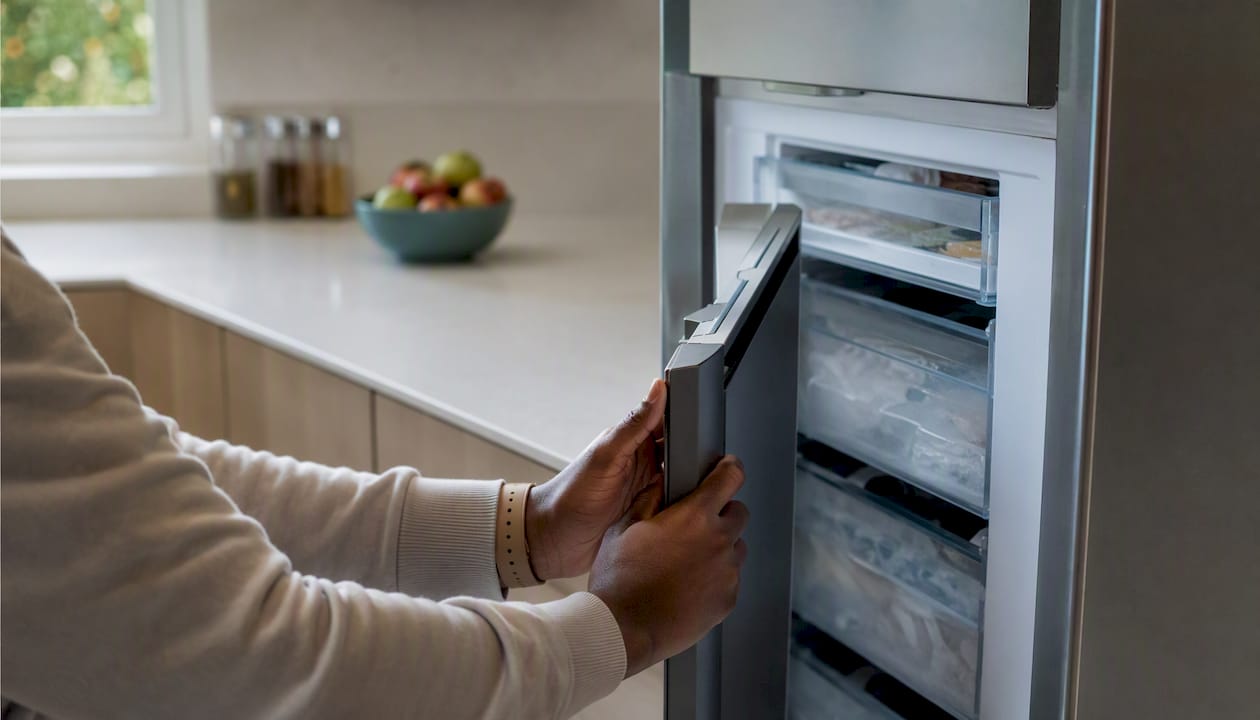
Noise levels on single-door fridges tend to be low, since the compressor is smaller and works less often, especially once the fridge stabilises at temperature. Longevity is usually solid too, given fewer moving parts, but that's only true if the warranty actually holds up. Always check how long the compressor warranty runs and whether local service support exists before you commit, since a five-year compressor warranty means little if no one nearby can act on it.
Double door refrigerator styles: pros, cons and who they suit
Double-door fridges cover more ground than the name suggests. You'll find side-by-side models with a vertical freezer and fridge compartment, French door units with two fridge doors up top and a freezer drawer below, and bottom-freezer designs where the whole freezer sits under the main compartment. Each format solves the same problem, more usable space and better organisation, in a slightly different way.
The pros line up well for families and anyone who shops in bulk:
- Larger usable storage, typically 250 to 500 litres or more, enough for a family's weekly shop and a proper freezer stock.
- Better organisation, with dedicated drawers, multiple shelves, and separate temperature zones in many models.
- Frost-free technology in most units, which removes the manual defrosting chore entirely.
- Convenience extras like ice and water dispensers, which some models support directly through accessory ranges such as Everydropwater for filter replacements.
The downsides matter just as much for a budget-focused decision. Double-door fridges cost more upfront, use more electricity, and take up considerably more kitchen space, both in width and in the clearance needed to open doors fully. Repairs can also be pricier, since frost-free systems add a fan, drain heater and extra electronics that a basic single-door fridge simply doesn't have.
One practical quirk worth knowing before you buy: narrow door bins on some side-by-side models struggle to fit a tall milk carton or a wide two-litre bottle, which chips away at the "more space" promise despite the bigger overall footprint. It's a small thing that only becomes obvious after delivery, so check bin width in the product listing or measurements if you can.

Models like the Samsung RT31CG5421S9 305L double door fridge and the LG GC-V459FSKW 349L bottom freezer refrigerator both show clear warranty terms and inverter compressor details on their listings, which is exactly the sort of transparency worth looking for regardless of which brand you end up choosing. For households needing serious bulk storage, something like the Samsung RS57DG4000M9 583L side-by-side shows how far capacity scales once you move past entry-level double-door sizes.
Capacity, energy use and maintenance: the numbers that decide it
The gap between single-door and double-door fridges isn't really about looks. It comes down to three measurable things: how much you can actually store, how much electricity that storage costs you each year, and how much upkeep it demands.
| Metric | Single-door | Double-door |
|---|---|---|
| Usable capacity | Up to ~250 litres | ~250 to 500+ litres |
| Typical annual energy use | ~100 to 150 kWh (around 150 L model) | ~200 to 300 kWh (frost-free model) |
| Typical footprint width | Narrower, compact profile | Wider, needs more door clearance |
| Cooling method | Usually direct-cool | Usually frost-free |
| Manual defrost needed | Yes, every 2 to 4 weeks typically | Rarely, if ever |
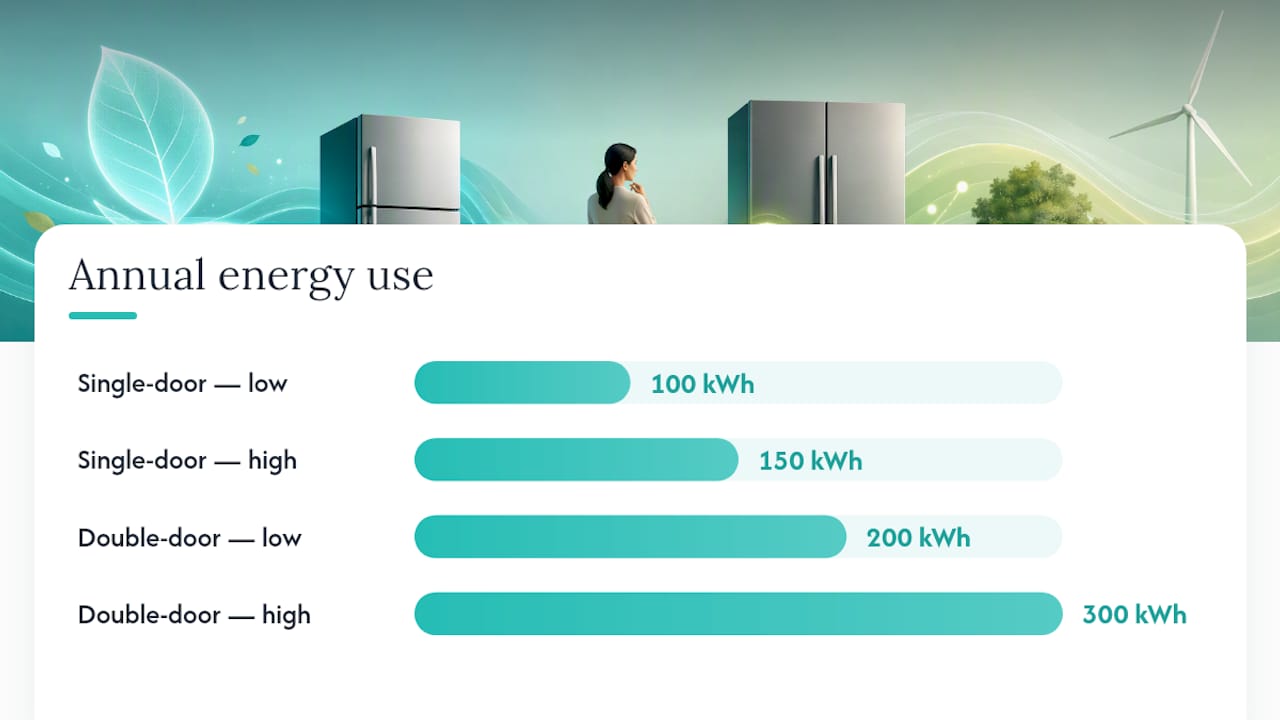
The cooling method explains most of that energy and maintenance gap. Direct-cool fridges rely on natural convection to keep things cold, which is cheap to build and run but lets frost build up on the walls, forcing you to defrost manually. Frost-free double-door units use a fan to circulate cold air and a small heater to melt any ice automatically, which is far more convenient but adds to the electricity draw and gives you more components that can eventually fail.
Pro Tip: Check the energy label on the listing before comparing prices. A frost-free double-door model with an inverter compressor can sometimes cost less to run annually than an older fixed-speed single-door fridge, even though the fixed-speed unit looks cheaper on the sticker price.
To work out real lifetime cost rather than just the number on the price tag, run through this quick sequence:
- Note the purchase price as your baseline figure.
- Check the energy label and multiply the stated annual kWh by your local electricity rate to estimate yearly running cost.
- Add a rough maintenance allowance, low for direct-cool single-door units, slightly higher for frost-free double-door models with more moving parts.
- Multiply the running cost and maintenance allowance by the years you expect to keep the fridge, typically 8 to 12 years.
- Add that total to the purchase price for a genuine like-for-like comparison between models.
How to choose between a single and double door fridge
Picking the right configuration comes down to five honest questions about how your household actually lives, not how you imagine it might.
- How many people are you feeding? One or two people rarely need more than 250 litres; three or more usually benefit from double-door capacity.
- How often do you shop? Frequent small shops suit a single-door fridge; weekly or bulk shopping favours double-door storage.
- Do you freeze in bulk? If your freezer holds more than a few days of food, a bottom-freezer or side-by-side double-door model earns its keep.
- How much kitchen space do you actually have? Measure the gap, including door swing clearance, before assuming a double-door model will fit.
- How sensitive are you to your electricity bill? If every shilling on the power bill matters, direct-cool single-door models remain the cheaper long-term bet.
Before you buy, whether online or in person, ask these five things:
- What's the usable litre figure, not just the gross capacity quoted in marketing copy?
- What does the energy-efficiency label actually say, and can you see it on the listing?
- Is the compressor inverter or fixed-speed, and does the listing confirm which?
- How long is the warranty, and does it cover the compressor separately?
- Is there local after-sales support if something breaks in year three?
Watch for a few red flags too: a missing energy label, a warranty shorter than two years, a freezer compartment too small to be genuinely usable, or no clear indication of local servicing. Any one of those should make you pause, even if the price looks tempting.
Why manual defrosting still catches people out
Direct-cool single-door fridges need manual defrosting roughly every two to four weeks to stop ice building up around the freezer compartment. Skip that step for too long and the ice layer acts as insulation, forcing the compressor to work harder and run longer to hit the same internal temperature. Over months, that raises your electricity use and shortens the compressor's working life, quietly cancelling out the energy savings that made a single-door fridge attractive in the first place.
Pro Tip: Set a recurring reminder every three weeks for the first two years of ownership. Switch the fridge off, empty the freezer compartment, and let the ice melt naturally for an hour rather than chipping at it with a knife, which risks puncturing the cooling coils.
It's also worth checking the warranty terms specifically around compressor cover, since that's the single most expensive part to replace on either fridge type. Inverter compressors, increasingly common on mid-range double-door models, often carry longer standalone warranties than the rest of the appliance, sometimes five or more years, precisely because manufacturers expect them to outlast fixed-speed units. Confirm the servicing network covers your area before you rely on that warranty in practice.
What actually swings the decision for most buyers
Most guides frame this as single-door for singles, double-door for families, and leave it there. That's not wrong, but it undersells how much the maintenance habit matters. A single-door fridge only delivers its promised energy savings if someone actually defrosts it on schedule. Skip that discipline for a year and the running-cost gap between single and double-door narrows sharply, sometimes to the point where the "cheaper" fridge isn't cheaper at all once you add the extra electricity and the earlier compressor replacement.
The other underrated factor is inverter technology creeping into both categories. A few years ago, buying double-door automatically meant a bigger power bill. That's less certain now. An inverter-equipped double-door model can run more efficiently than a fixed-speed single-door fridge left running non-stop in a hot kitchen. The door count matters less than people assume; the compressor type and your own habits around defrosting and door discipline matter more.
If there's one piece of contrarian advice worth taking from this, it's to stop treating capacity as the main decision point. Buy for your actual weekly shopping pattern and your tolerance for a defrosting chore, then let capacity fall out of that decision naturally.
Where to check current prices and warranty terms
Kenyatronics stocks both configurations with clear listings for capacity, compressor type and warranty length, which makes side-by-side comparison far easier than piecing specs together from separate manufacturer sites.
If your household is small and your kitchen is tight, the LG 315L top freezer refrigerator is worth a look; it's one of the larger single-door options without tipping into double-door pricing. For families who freeze in bulk and want frost-free convenience, both the Samsung RT31CG5421S9 305L double door fridge and the LG GC-V459FSKW 349L bottom freezer refrigerator list their inverter compressors and warranty terms upfront, so you're not guessing at running costs after delivery. Households needing serious bulk storage should compare the Samsung RS57DG4000M9 583L side-by-side against their kitchen footprint before ordering.
Whichever model you land on, it's worth pairing it with a surge protection device to guard the compressor electronics against voltage spikes, a cheap safeguard against the single most expensive repair either fridge type can throw at you. Check each product page for current pricing, delivery timelines and warranty specifics before you order, since terms can shift between listings even within the same brand.
Sources
- Single door vs double door refrigerators: Difference explained for Indian buyers
- Single Door vs Double Door Refrigerator: What's the Difference?
- Single Door vs Double Door Fridges | Bajaj Finserv

Comments
Comments are open to signed-in accounts. Message us on WhatsApp if you have something to say about this one.