
Convection vs solo microwave: which to buy
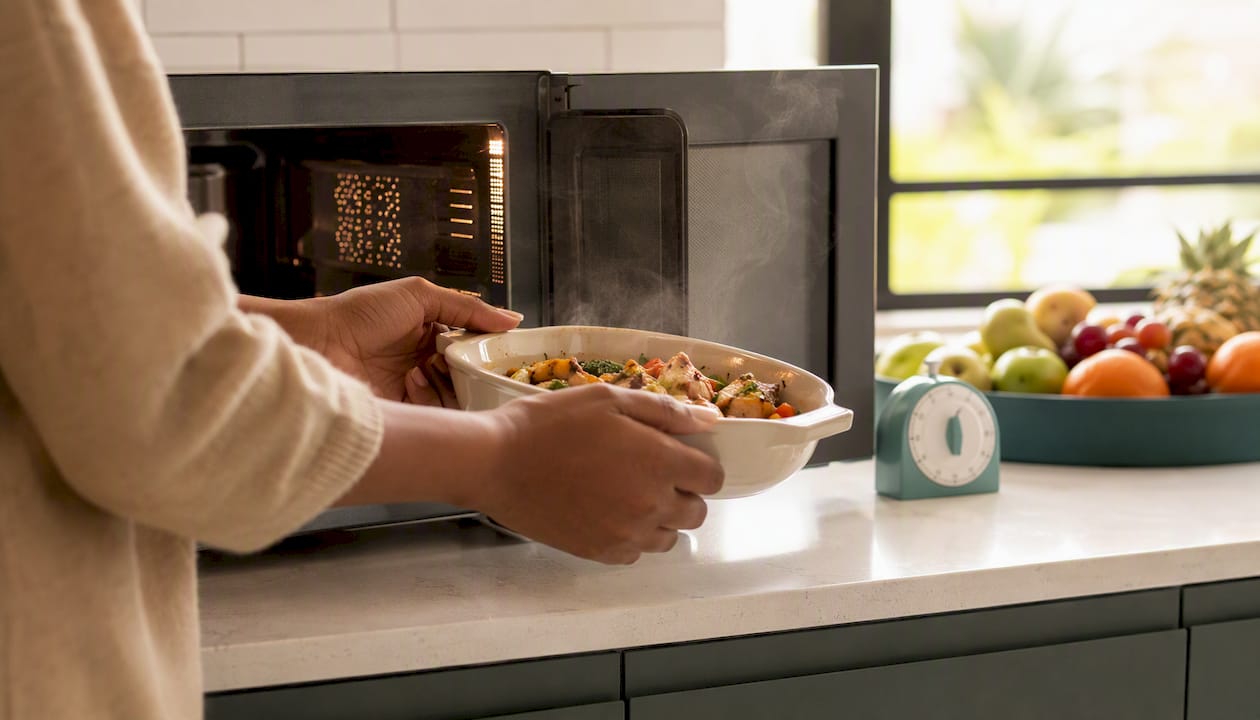
If you mostly reheat leftovers and defrost mince, buy a solo microwave. If you want to bake, roast, or brown food and are happy paying more for it, buy a convection microwave. The trade-offs come down to a handful of factors:
- Versatility: solo reheats and defrosts; convection bakes, roasts, and grills too.
- Browning and crisping: solo can't do it; convection can, thanks to a fan and heating element.
- Price and size: solo is cheaper and smaller; convection costs more and takes up more counter space.
Key Takeaways
Choosing between a solo and convection microwave comes down to whether you need browning and baking capability or simply fast, cheap reheating.
| Point | Details |
|---|---|
| Solo suits simple needs | Best for reheating, defrosting, and basic cooking on a tight budget or in a small kitchen. |
| Convection adds versatility | The fan and heating element let it bake, roast, and grill, unlike a solo unit. |
| Browning is the deciding factor | If you need a browned or crisped finish, only convection delivers it. |
| Check preheat and capacity before buying | Convection models often need preheating and more counter clearance. |
| Kenyatronics stocks both types | Compare the solo LG NeoChef and the convection Samsung MC32DG7646CK side by side before buying. |
Table of Contents
- What is a solo microwave and when does it work best?
- What is a convection microwave and what extra cooking does it enable?
- How do solo and convection microwaves compare feature by feature?
- Pros and cons of each type at a glance
- Which microwave suits your cooking habits?
- What to check before you buy
- Compare models and buy with confidence
- Sources
What is a solo microwave and when does it work best?
A solo microwave heats food using microwave radiation alone. There's no fan, no heating element, just the magnetron doing its job. That makes it the appliance you reach for daily rather than the one you plan meals around.
It excels at the boring, essential stuff: reheating last night's curry, defrosting chicken breasts before dinner, steaming vegetables, warming milk. A solo microwave handles all of that fast and cheaply.
What it can't do is brown or crisp anything. Reheated pizza comes out soggy on the base. Toast goes rubbery. Anything you'd expect to come out of an oven crisp will come out of a solo microwave limp.
- Cheap to buy and cheap to run
- Compact enough for a small kitchen or student flat
- No learning curve, minimal buttons to understand
- Zero browning, so pastry and crusts suffer
What is a convection microwave and what extra cooking does it enable?
A convection microwave adds a heating element and a fan to the standard microwave setup. That fan circulates hot air around the cavity, which is exactly what lets these units bake, roast, and grill rather than just reheat. Most switch between microwave-only, grill, convection, and combination modes.
That flexibility shows up in daily use. You can bake a small batch of cookies, roast a tray of vegetables, brown the top of a lasagne, or crisp up frozen samosas so they don't come out limp.
- Bakes small cakes and biscuits without a separate oven
- Roasts vegetables and small joints with genuine colour
- Combination mode uses microwave energy alongside the fan or grill to cut cooking time while still browning the surface
- Needs preheating for convection baking, adds noise from the fan, and costs more upfront
How do solo and convection microwaves compare feature by feature?
The differences aren't subtle once you line them up side by side.
| Feature | Solo microwave | Convection microwave |
|---|---|---|
| Primary function | Reheating, defrosting, simple cooking | Reheating plus baking, roasting, grilling |
| Browning & crisping | None | Yes, via fan and heating element |
| Evenness of cooking | Can leave hot spots | More even, especially with multiple dishes |
| Preheating / cook time | No preheat needed | Often needs a short preheat for baking |
| Size & capacity | Typically compact size suitable for one or two people | Often larger capacity designed for baking dishes |
| Energy use / running cost | Lower for short reheating tasks | Higher when using convection or grill modes |
| Price (upfront) | Lower | Higher |
| Cleaning & maintenance | Simple, fewer parts | More surfaces, sometimes a crisp plate to clean |
| Noise / user experience | Quiet | Fan noise during convection or combination modes |
Reheat a slice of pizza in a solo microwave and the crust turns chewy within seconds. Do the same in a convection microwave on combination mode and the base stays reasonably firm while the cheese melts properly. Try roasting a small chicken and the gap widens further: a solo microwave will cook it through but leave pale, steamed-looking skin, while a convection oven's fan delivers something closer to an actual roast.
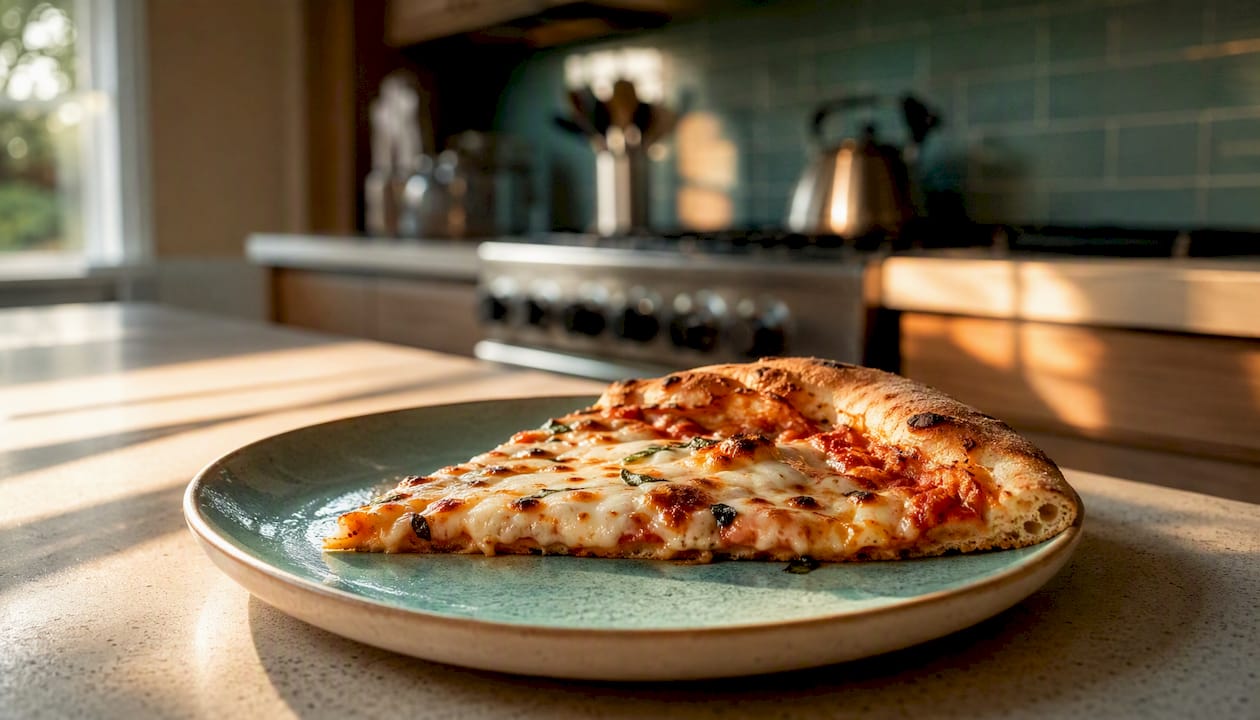
The biggest pivot point is usually browning versus speed and running cost. If you never need a browned finish, solo wins on every practical measure.
Pros and cons of each type at a glance
Solo microwaves and convection microwaves solve different problems, and the trade-offs are worth stating plainly before you spend anything.
Solo microwave pros:
- Low purchase price
- Compact footprint for tight kitchens
- Energy-efficient for short reheating jobs, since microwaves heat food directly rather than warming an entire cavity
- Simple to operate and clean
Solo microwave cons:
- No browning or crisping, ever
- Limited to one cooking method
- Uneven textures on foods that want a crust
Convection microwave pros:
- Bakes, roasts, and grills like a mini oven
- More even heat distribution across the cavity
- Can genuinely replace a small oven for everyday tasks
Convection microwave cons:
- Higher upfront cost
- Bigger footprint and more clearance needed
- Fan noise and a small learning curve for modes
Which microwave suits your cooking habits?
Match the appliance to how you actually cook, not to how you imagine you might cook someday.
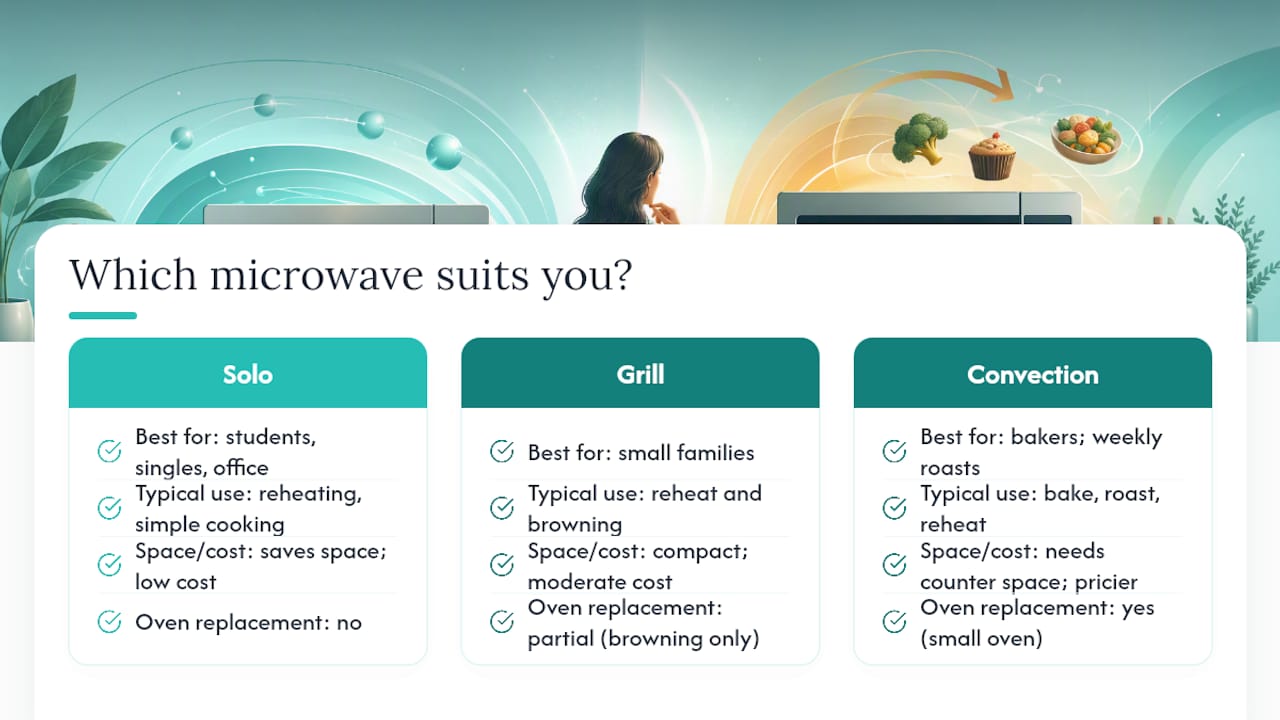
If you're a student, live alone, or mostly use an office kitchenette, a solo model covers everything you need without wasting money on features you'll never touch. A small family that reheats often but rarely bakes is usually best served by a solo microwave too, or at most a grill model for the occasional browned cheese on toast.
If you bake or roast once a week or more, convection microwaves tend to pay for themselves in flexibility, especially in a small flat where a full oven isn't practical. Tight counter space or a fixed budget usually settles the question in favour of solo. Wanting one appliance that replaces a small oven usually settles it the other way.
Anyone weighing up how much kitchen tech to lean on might also find it useful to check how AI cooking apps handle meal planning for busy households, since the appliance matters less than the routine you build around it.
What to check before you buy
A few specs decide whether you'll be happy with the purchase in six months, not just on day one.
- Capacity: measured in litres; 20 to 23L suits one or two people, 30L or more suits a family that bakes.
- Wattage: higher microwave watts cook faster; check convection wattage separately since it's usually a different figure.
- Modes available: confirm it actually has grill and combination modes, not just convection in name.
- Preheat behaviour: some models preheat automatically, others need you to set it manually.
- Auto programmes and sensors: useful if you want one-touch defrost or reheat settings.
- Cavity material and accessories: check for a crisp plate or rack, which help with browning.
- Warranty and service: confirm local support and parts availability, not just the headline warranty length.
- External footprint and clearance: convection units need airflow space around the back and sides, and they weigh more than solo models.
Pro Tip: Be honest about how often you'll actually use the convection function. If it's likely to sit idle after the first month, a good solo model and the money saved will serve you better than an underused convection oven.
Why does convection cooking produce more even, browned results?
The fan at the back of the cavity pulls hot air from the heating element and pushes it continuously around the food, which stops the pockets of stagnant heat that cause hot spots in a solo microwave. That circulation is also what triggers the Maillard reaction, the browning process a solo microwave physically cannot produce.
Convection microwaves behave like compact ovens: they preheat faster than a full-size oven, but many models top out around 200°C, so don't expect them to sear or brown pastry bases the way a proper oven does without help from a crisp plate.
A retailer's view on choosing between the two
Feature lists sell microwaves; fit to actual use keeps them out of cupboards. Oliver's relevant experience or credentials related to electronics retail or product knowledge reinforce this. Kenyatronics carries both solo and convection models for exactly this reason.
Compare models and buy with confidence
Kenyatronics stocks both categories side by side, so you're not choosing blind between a solo unit and a convection oven based on a spec sheet alone.
If your household mostly reheats and defrosts, the LG 25L NeoChef solo microwave covers that job without the extra cost of features you won't use. If you want baking, roasting, and grilling in one appliance, the Samsung 32L convection microwave with grill gives you that range in a single unit. Every model comes with warranty details and support listed on the product page, and prices sit side by side so you can weigh the gap between a solo and convection unit before deciding. Check the specs, compare the warranty terms, and pick the one that matches how you actually cook, not how you imagine you might.

Comments
Comments are open to signed-in accounts. Message us on WhatsApp if you have something to say about this one.